Camelia Script: A Sweet Touch for Upscale Design
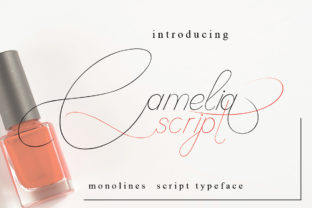
There's a particular challenge in design: how to inject personality and warmth without sacrificing sophistication. Many script fonts lean heavily into casual, handwritten feels, which can sometimes undermine a brand's premium positioning. Others are so ornate and formal they feel distant or stuffy. Finding that sweet spot—a typeface that's both charming and chic, personal yet polished—is like striking gold. Enter Camelia Script, a monoline script that masterfully balances these qualities. Its consistent, even-weight strokes create a clean, modern foundation, while its gentle curves and subtle loops deliver an undeniable cute and sweet look. This isn't a font that shouts; it whispers with confidence. It’s the typographic equivalent of a perfectly tailored silk blouse—elegant, comfortable, and effortlessly stylish. For designers, entrepreneurs, and creators aiming to add an upscale and chic look to their projects, Camelia Script offers a compelling solution that feels both fresh and timeless.
The Anatomy of a Modern Monoline Script
Understanding what makes Camelia Script tick starts with its structure. As a monoline script, its most defining feature is the uniform thickness of its lines. Unlike calligraphic scripts that mimic the pressure variations of a broad-nib pen, creating thick downstrokes and thin upstrokes, Camelia maintains a consistent weight. This is crucial for its modern typography appeal. The evenness ensures exceptional clarity, especially at smaller sizes or on busy backgrounds, making it a surprisingly versatile display font. It avoids the visual noise that can plague more ornate scripts.
But character is in the details. Camelia's letterforms are carefully crafted with soft, rounded terminals and gently flowing connections. The spacing—the kerning and tracking—is typically well-considered out of the box, promoting a smooth, readable flow. It doesn't have the abrupt, jerky connections of some handwritten fonts, nor the rigid, mechanical feel of a standard sans serif font. Instead, it achieves a natural, hand-lettered rhythm that feels authentic and approachable. This combination of technical precision (the monoline consistency) and organic warmth (the sweet, rounded forms) is what gives Camelia its unique personality. It feels crafted, not generated, which is a subtle but powerful cue for quality in brand identity.
Where Camelia Script Truly Shines: Practical Applications
The true test of any creative font is how it performs in the wild. Camelia Script's balanced aesthetic makes it adaptable across a surprising range of projects. It’s not a one-trick pony. Consider its role in logo design. For a boutique bakery, a floral studio, or a handmade jewelry line, Camelia can form the core logotype, instantly communicating care, quality, and a personal touch. Paired with a simple sans serif font for supporting text, it creates a hierarchy that is both beautiful and functional. The key is to use it strategically—it’s a star player, not the entire team.
Beyond logos, its applications are extensive:
- Editorial & Packaging Design: On magazine covers, book titles, or product labels, Camelia adds a premium, artisanal feel. It works beautifully for headlines in lifestyle, wellness, or food publications. For packaging design, especially for cosmetics, gourmet goods, or children's products, it conveys a sense of delicacy and upscale appeal.
- Digital & Web Design: In the digital realm, Camelia excels in hero sections, call-to-action buttons, and section headings. It brings personality to web design without compromising load times or readability when used judiciously. For social media graphics, it’s a powerhouse—perfect for quote overlays, sale announcements, and profile branding on platforms like Instagram and Pinterest where visual appeal is paramount.
- Marketing & Brand Collateral: From email headers to business cards and thank-you notes, Camelia helps build a consistent and memorable brand identity. Its sweet tone is ideal for customer-facing communications that aim to feel personal and grateful.
- Personal & Crafting Projects: For hobbyists and crafters, it’s a fantastic design asset. Think wedding invitations, greeting cards, personalized stationery, or custom planners. Its charm adds a professional finish to DIY projects.
Making It Work: Pairing, Readability, and Licensing
Integrating a premium font like Camelia Script into your workflow requires a bit of strategy. First, consider font pairing. A script font needs a partner. The most reliable combination is pairing Camelia with a clean, neutral serif font or sans serif font. For example, a classic serif like Playfair Display or a geometric sans serif like Montserrat provides a stable, readable foundation that lets the script's personality pop without competition. Avoid pairing it with other decorative or highly stylized fonts, which can create visual chaos.
Readability is paramount. While Camelia is clearer than many scripts, it's still a display font best suited for short bursts of text: headlines, subheadings, logos, and callouts. Never set a full paragraph of body copy in a script font; it becomes a chore to read. Always test your designs at the actual size and on the intended medium. Zoom out on your screen or print a sample. If the words blur together or the eye struggles to follow the line, you need to increase the size or simplify the context.
Finally, a practical note on licensing. Camelia Script is a commercial font. Before using it in any project—especially for a client or for sale—ensure you have the correct license. Most foundries offer different tiers: a desktop license for print and static images, a webfont license for websites, and sometimes an app or e-pub license. Purchasing the appropriate license supports the type designer and protects you legally. It's a professional courtesy and a necessary step in using design assets responsibly.
In the end, choosing a typeface like Camelia is about aligning visual language with emotional intent. It’s for the moments when you want to say, "We care about the details, and we want you to feel special." Used thoughtfully, it becomes more than just a script font; it becomes a core part of your story's voice, adding that perfect touch of sweetness and sophistication that makes a design feel truly complete.