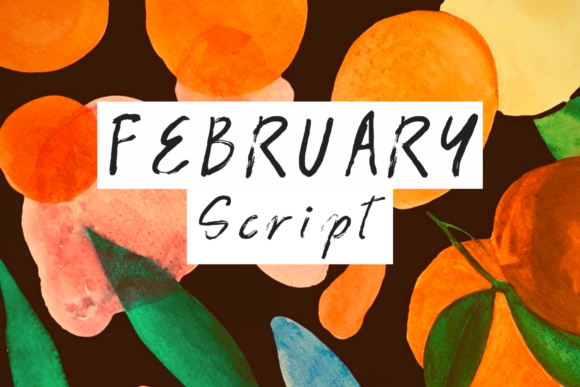
February Script: Where Brushstrokes Meet Your Boldest Ideas
There’s a certain energy to February. It’s the quiet hum of plans taking shape, the fresh start that feels more intentional than January’s rush. The February Script font captures that exact feeling. It’s not a frantic, overly flourished script; it’s a simple, brushed handwritten font with a confident, organic flow. Think of the stroke of a quality felt-tip pen on textured paper—each letter has a natural weight and a slight, charming imperfection that feels genuinely human. This isn't a typeface trying to mimic historical calligraphy. It’s a modern typography asset designed for today’s creators, offering a blend of casual warmth and polished clarity that’s surprisingly versatile.
The Visual Personality: More Than Just a Handwritten Font
At first glance, February Script presents as a friendly, approachable script font. Look closer, and you’ll appreciate its thoughtful construction. The letterforms are connected in a smooth, rhythmic flow, avoiding the jagged or overly tight connections that can hinder readability. The brush texture is present but controlled, giving it an artisanal quality without sacrificing legibility at smaller sizes. This balance is its superpower. It feels personal and crafted, yet it possesses the consistency required for professional applications. It’s the creative font you reach for when you need to inject personality without overwhelming your message.
Its character is inherently versatile. In one context, it feels playful and youthful—perfect for a children's boutique or a creative workshop. In another, with different pairing and spacing, it conveys sophisticated ease, ideal for a boutique hotel’s branding or a lifestyle blog. This adaptability stems from its core design: it’s a brush script that avoids extremes. It’s not overly feminine, not aggressively masculine, not childish, nor overly formal. It’s simply, effectively, human.
Strategic Applications: Where February Script Truly Shines
Understanding a font’s best use cases is key to unlocking its value. February Script excels as a display font, making it a powerful tool for specific, high-impact roles in your projects. It’s a supporting actor that elevates the lead, not a background player.
For Branding and Logo Design
As a component in logo design, this handwritten font can become the heart of a brand’s visual identity. It’s particularly effective for businesses built on authenticity, craftsmanship, or personal connection. Imagine it paired with a clean sans serif font for a coffee roaster’s logo, or with a sturdy serif font for an artisanal bakery. The script element instantly communicates care and a human touch, which is invaluable for small business owners and entrepreneurs looking to build a recognizable brand identity. It says, “We’re real people behind this product.”
In Marketing and Digital Content
For marketers and content creators, February Script is a secret weapon for visual hierarchy and engagement. Use it for pull quotes in editorial design, email newsletter headers, or standout phrases in social media graphics. Its unique texture will cut through the noise of a busy feed, drawing the eye without shouting. On a website, it can style a compelling call-to-action or a featured testimonial, guiding the reader’s attention effectively. This is where a premium font proves its worth—it provides a distinct voice that stock fonts simply cannot.
Across Print, Packaging, and Personal Projects
The applications extend beautifully into physical realms. In packaging design, it adds a premium, crafted feel to product labels, gift tags, or thank-you cards. For publishers and bloggers, it can title a book cover or style chapter headings in a print-on-demand journal, creating a cohesive and inviting aesthetic. Hobbyists and crafters will find it perfect for personalized stationery, wedding invitations, or scrapbooking, where its authentic brushstroke adds a layer of personal sentiment that typed text often lacks.
Making It Work: Practical Guidance for Flawless Integration
Adopting any new design asset requires a thoughtful approach. Here’s how to evaluate and implement February Script for maximum impact and professionalism.
Test for Readability and Pairing: Never use a script font for long paragraphs. Its strength is in headlines, logos, and short phrases. Always test it at the intended size. A great font pairing is crucial. Combine it with a highly legible sans serif like Montserrat or a classic serif like Merriweather for body text. The contrast creates visual interest and ensures your message is clear. Most premium fonts, including this one, often come with a family of styles—check for alternate characters or a set of swashes that can add extra flair to a single letter in a logo.
Evaluate the Project Fit: Ask yourself: does the personality of February Script align with my project’s tone? It’s ideal for brands that are approachable, creative, and personal. It may be less suitable for corporate law firms or ultra-minimalist tech startups seeking a cold, futuristic vibe. Its charm lies in its warmth.
Understand Commercial Use: If you’re working on a client project, a commercial product, or any for-profit endeavor, you must ensure you have the correct license. Using a commercial font legally is non-negotiable. Reputable foundries provide clear licensing terms for desktop, web, and app use. This isn’t just about legality; it’s about respecting the craft of the type designer and ensuring your own work is built on a solid, professional foundation.
Ultimately, February Script is more than just a typeface. It’s a catalyst. It’s the tool that can bridge the gap between a solid idea and a resonant visual identity. When you add it to your most creative concepts, you’re not just choosing letters—you’re adopting a voice. Notice how it doesn’t just sit on the page; it makes your ideas come alive with an energy that is both authentic and compelling.


