Loving Script: A Sweet Handwritten Font for Real Projects
There’s a particular feeling you get when a design just clicks. It’s not just about the colors or the layout; it’s about the voice. And often, that voice is carried by the typography. In a world saturated with clean, geometric sans serifs and authoritative serifs, there’s a growing need for something with a human touch—something that feels personal, approachable, and genuine. This is where a premium font like Loving Script enters the conversation. It’s not just another script font; it’s a carefully crafted handwritten font designed to inject warmth and authenticity into a wide array of projects.
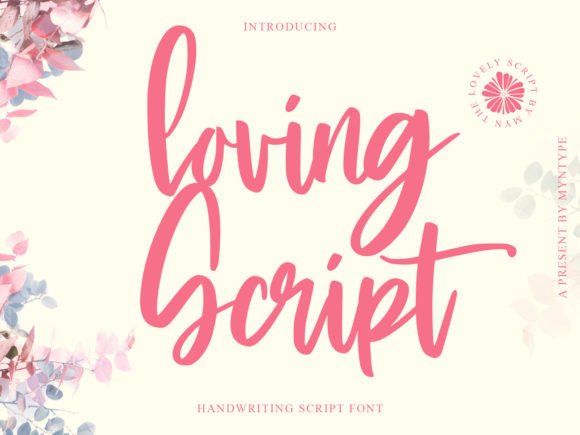
At its core, Loving Script is a creative font that balances sweetness with legibility. Its strokes flow with a natural, slightly irregular rhythm, mimicking the subtle imperfections of real handwriting. This isn’t a rigid, formal calligraphy; it’s friendly, open, and inviting. The letterforms have a gentle bounce, and the connections between characters feel organic. This personality makes it incredibly versatile. It can feel playful for a children’s brand, elegant for a boutique, or sincere for a heartfelt invitation. The key is its inherent friendliness—it doesn’t intimidate. It invites the reader in.
Where Does a Font Like Loving Script Truly Shine?
Understanding a font’s personality is one thing; knowing where to apply it is another. The strength of a display font like Loving Script lies in its ability to capture attention and convey emotion at a glance. This makes it a powerful tool for specific applications where connection is paramount.
In logo design, especially for small businesses, cafés, bakeries, or boutique studios, Loving Script can become the cornerstone of a brand identity. It immediately communicates a hands-on, personal quality. Pair it with a clean, geometric sans serif font for body text, and you create a hierarchy that is both eye-catching and professional. The script draws the eye for the brand name, while the sans serif ensures supporting information remains crisp and readable.
For packaging design, this font is a natural fit. Think of artisanal goods, specialty foods, or beauty products. Using Loving Script on a label or box front adds a layer of craftsmanship and care. It suggests that the product inside was made with attention and love, which is a powerful subliminal message for consumers. Similarly, in editorial design for magazines, blogs, or book covers, it works beautifully for pull quotes, chapter titles, or feature headers, breaking up dense text and adding a moment of visual delight.
The digital space is equally receptive. Social media graphics thrive on personality. A quote card, a promotional announcement, or a story highlight styled with Loving Script can stop the scroll. It feels more personal and less corporate than a standard typeface, which can increase engagement. For web design, while it’s not suited for long paragraphs, it’s perfect for hero section callouts, special offer banners, or personal blog headers, adding a unique flair to the user experience.
Making It Work: Practical Guidance for Using Loving Script
Choosing the right design assets is about more than just aesthetics; it’s about function and fit. Before committing to any commercial font, including Loving Script, a practical evaluation is crucial. Start by defining the project’s tone. Is it whimsical, sophisticated, casual, or celebratory? Loving Script leans toward the sweet, friendly, and casual-sophisticate end of the spectrum. If your project demands stark minimalism or aggressive modernity, a different typeface might be more appropriate.
Next, consider font pairing. This is where many designers, both new and experienced, can elevate their work. A script font like Loving Script should rarely stand alone for large blocks of text. Its true power is unlocked when contrasted. The classic and often most effective pairing is with a neutral serif font or sans serif font. For example, pairing Loving Script with a font like Lora (a readable serif) or Montserrat (a clean sans serif) creates a clear visual hierarchy. The script handles the emotional, high-impact headlines, while the companion font handles the practical, readable body copy.
Always test the font in context. Does it maintain readability at the size you need? While it’s legible for headlines, using it for a 10-point caption might cause issues. Check the included styles. Does the font family come with alternate characters, ligatures, or stylistic sets? These extras, common in a quality premium font, allow you to customize the look and avoid repetitive letter shapes, making your text feel even more authentically handwritten.
Finally, understand the licensing. For any project with a commercial aim—whether it’s a client’s logo, a product you sell, or a monetized blog—you need a commercial font license. Ensure the license for Loving Script covers your intended use. This is a non-negotiable step in professional practice. It protects you legally and supports the type designers who create these valuable tools.
In the end, a font is more than just a set of letters. It’s a tool for communication and connection. Loving Script, with its unique and natural style, offers a specific and valuable voice. It’s the tool you reach for when you need to add a layer of warmth, personality, and human touch to your work. By understanding its strengths and applying it thoughtfully, you can use it to create designs that don’t just look good, but feel right, too.